Just a quick look at that message, just a quick check of email – and the hour is gone, while the real work has not moved. The Pomodoro Technique is one of the simplest ways out of that, and all it takes is a timer. Here is how it works, how to make it your own, and what matters in a Pomodoro app.
What is the Pomodoro Technique?
Francesco Cirillo came up with it as a student in the late 1980s. He set a tomato-shaped kitchen timer – pomodoro is Italian for tomato – and worked until it rang. That is where the name comes from: one work interval is still called a “pomodoro”.
How it works
- Pick one task. Just one – read the chapter, find the bug, outline the presentation.
- Work on it for 25 minutes. No phone, no email, no “just quickly”.
- Take a 5-minute break. Stand up, drink something, look out of the window.
- After four rounds, take a long break of 15 to 30 minutes.
That is all. The rules are simple enough that you actually keep them.
Why it works
- Starting gets easier. “Only 25 minutes” is a small promise – far easier than “the whole afternoon on this”.
- Breaks are part of the plan. Working straight through slows you down without you noticing. A break before your focus fades keeps it going all day.
- Distractions get a place. Whatever comes to mind during a pomodoro, write it down and deal with it in the break – not right away.
- You see what you did. Four finished cycles are something to show, even on a day the task is not done yet.
Tips for every day
- Adjust the length. 25 minutes is a starting point, not a rule. Deep work like coding or writing often fits 45 or 50 minutes better; on a hard day, 15 minutes gets you past the start.
- Make the break a break. Scrolling through messages is not rest. Moving and looking into the distance help more.
- Name what you work on. A name per cycle – “statistics exam”, “report” – keeps you on track and later shows where your time went.
- Go easy on yourself. An interrupted pomodoro is not a failure. Just start the next one.
What matters in a Pomodoro app
A kitchen timer is enough – but an app counts the rounds for you and reminds you of the breaks. It just must not become a distraction itself. Look for:
- No ads. A banner in the app that is meant to help you focus is a contradiction.
- A calm design. The timer should be readable at a glance – nothing more.
- No account required. A timer does not need a sign-up.
- A signal that fits in. A gentle sound instead of an alarm – and on a phone, one that respects silent mode.
- Breaks taken seriously. The app should guide the break just like the work.
Zen Cycle: a Pomodoro timer that stays out of your way
I was looking for an app that would help me focus on my tasks at work – and remind me when to take a break, change my sitting position or walk around a bit. There were plenty of Pomodoro apps, but they all looked cluttered and noisy. So I decided to build my own: one that does the usual Pomodoro things, and nothing that gets in the way.
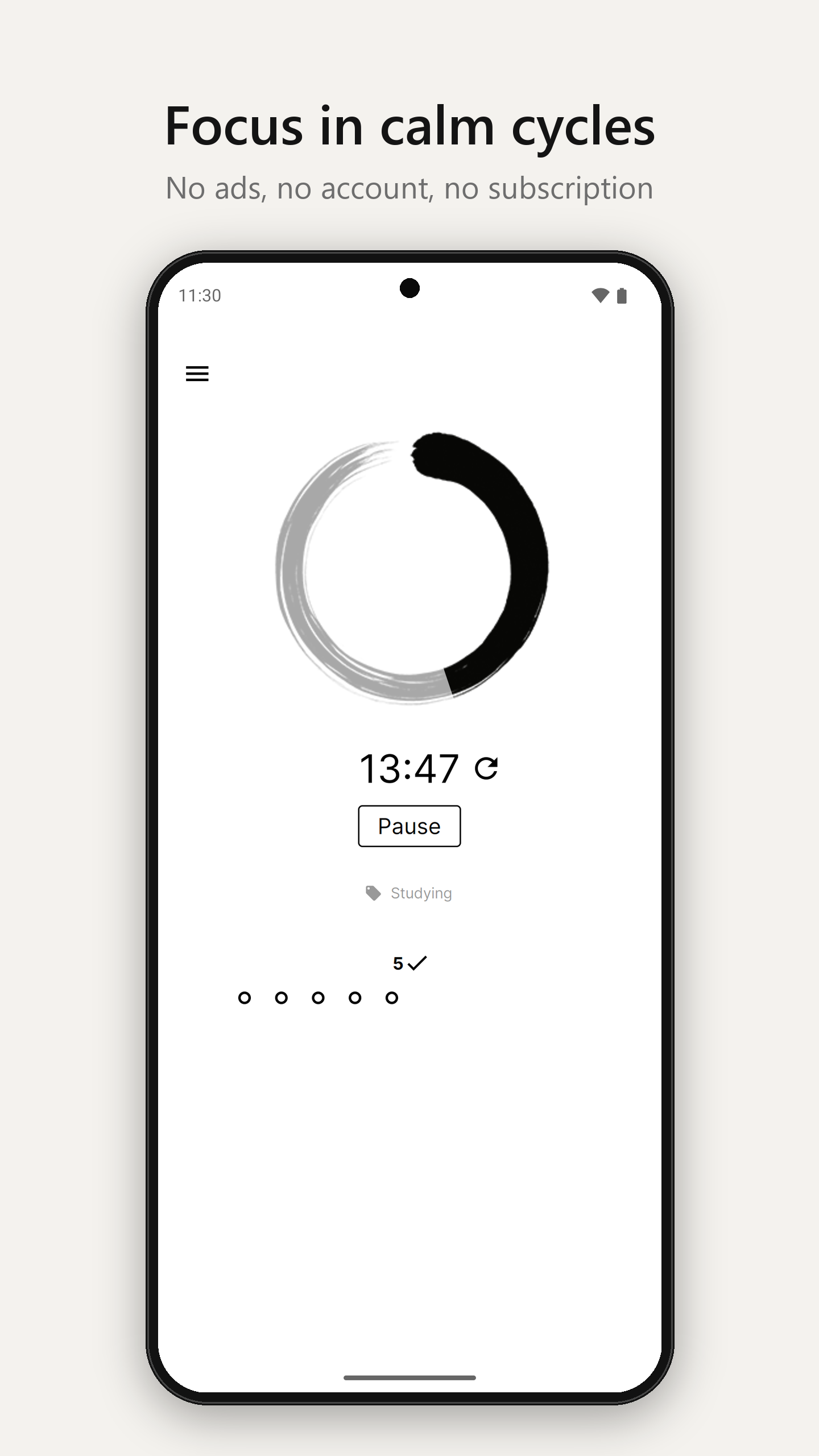
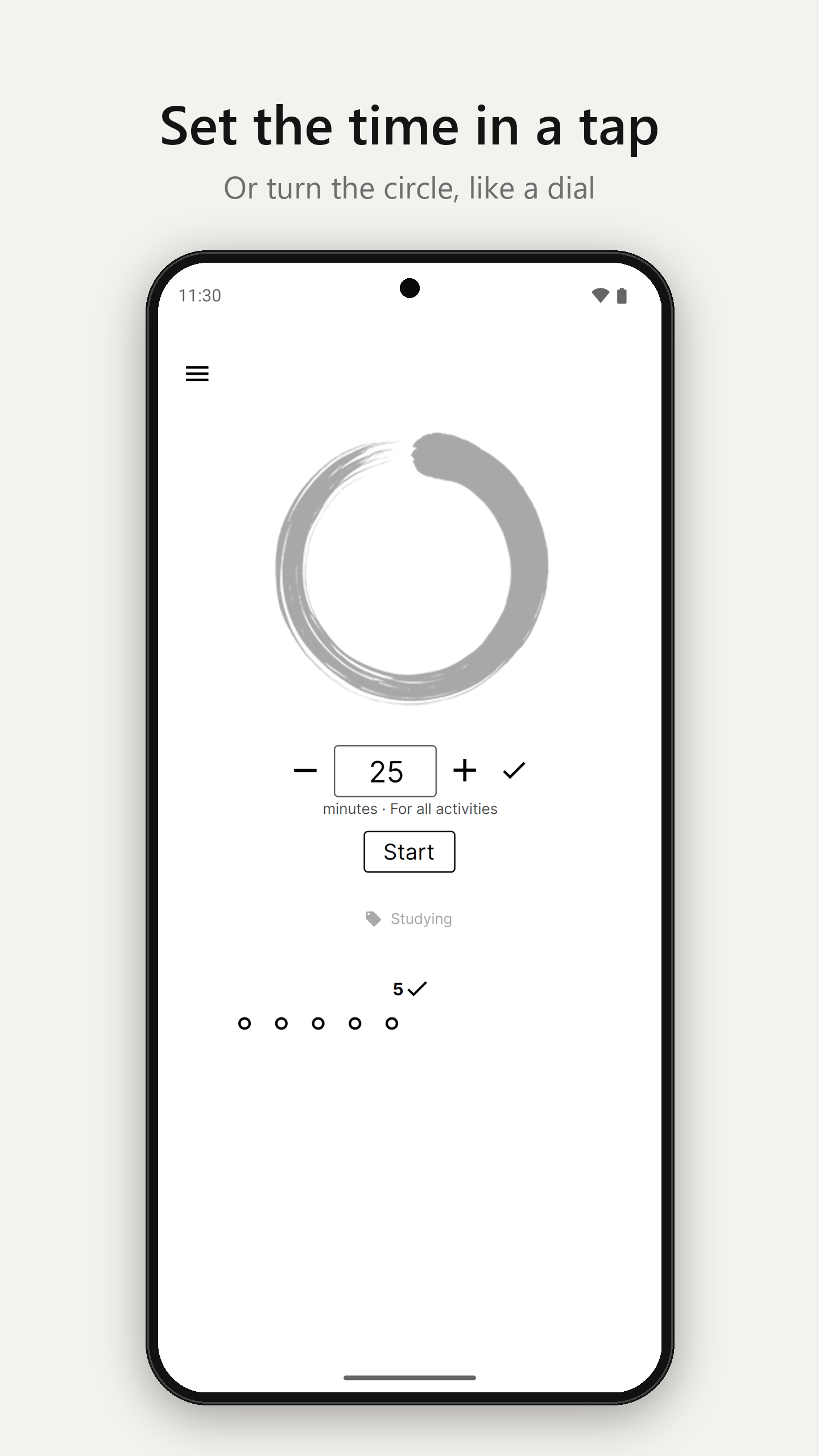
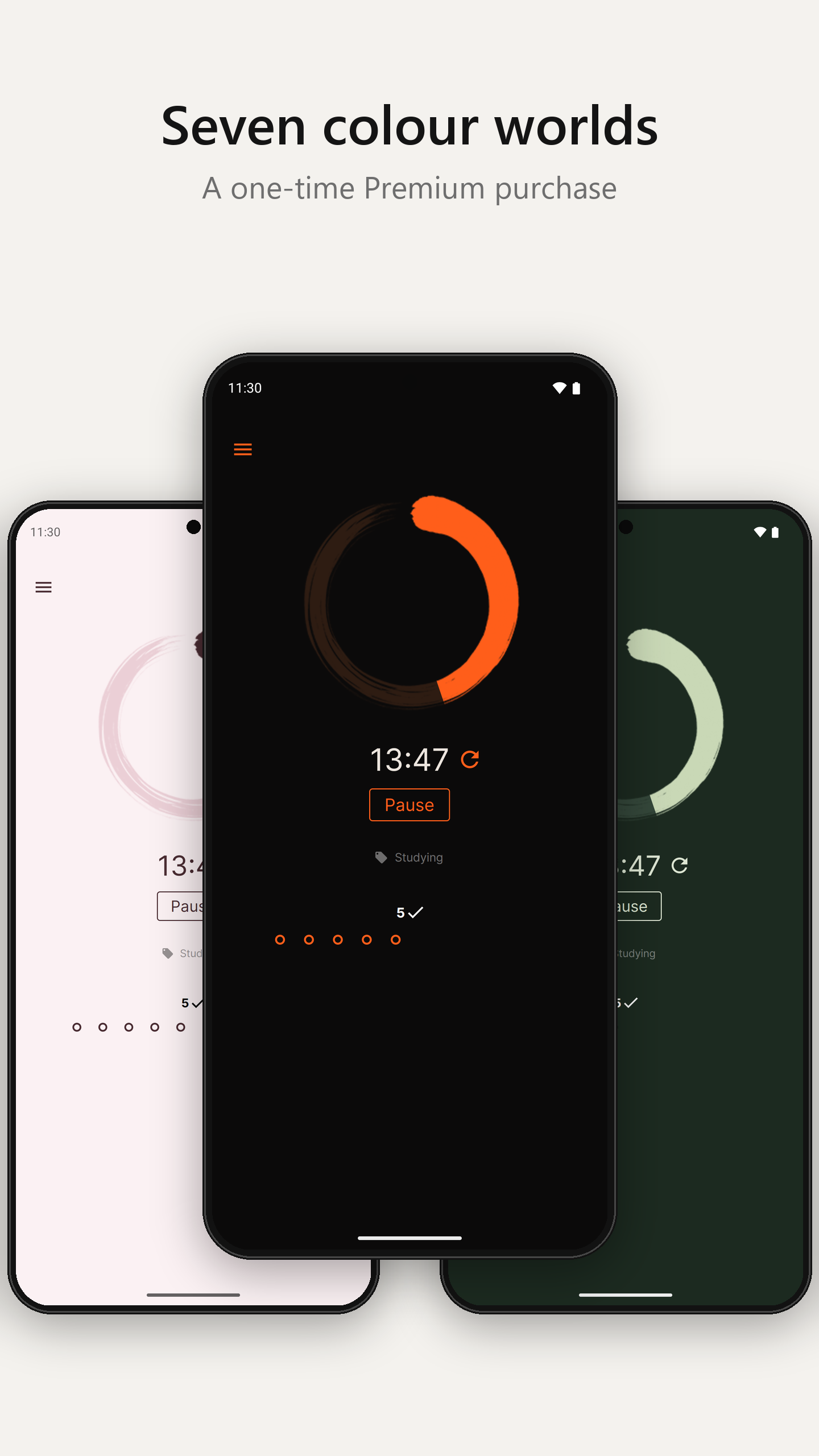
Zen Cycle is that timer. At its centre is an enso, the circle of Zen calligraphy, which fills as time passes. You set the duration with a turn of the circle, name your activity and start. A gentle gong marks the end of each phase; after a few cycles comes the long break.
Free, without limits:
- Focus and breaks as long as suits you
- Your activities and today’s cycles at a glance
- A gong in the sound you choose, which keeps to silent and vibrate mode
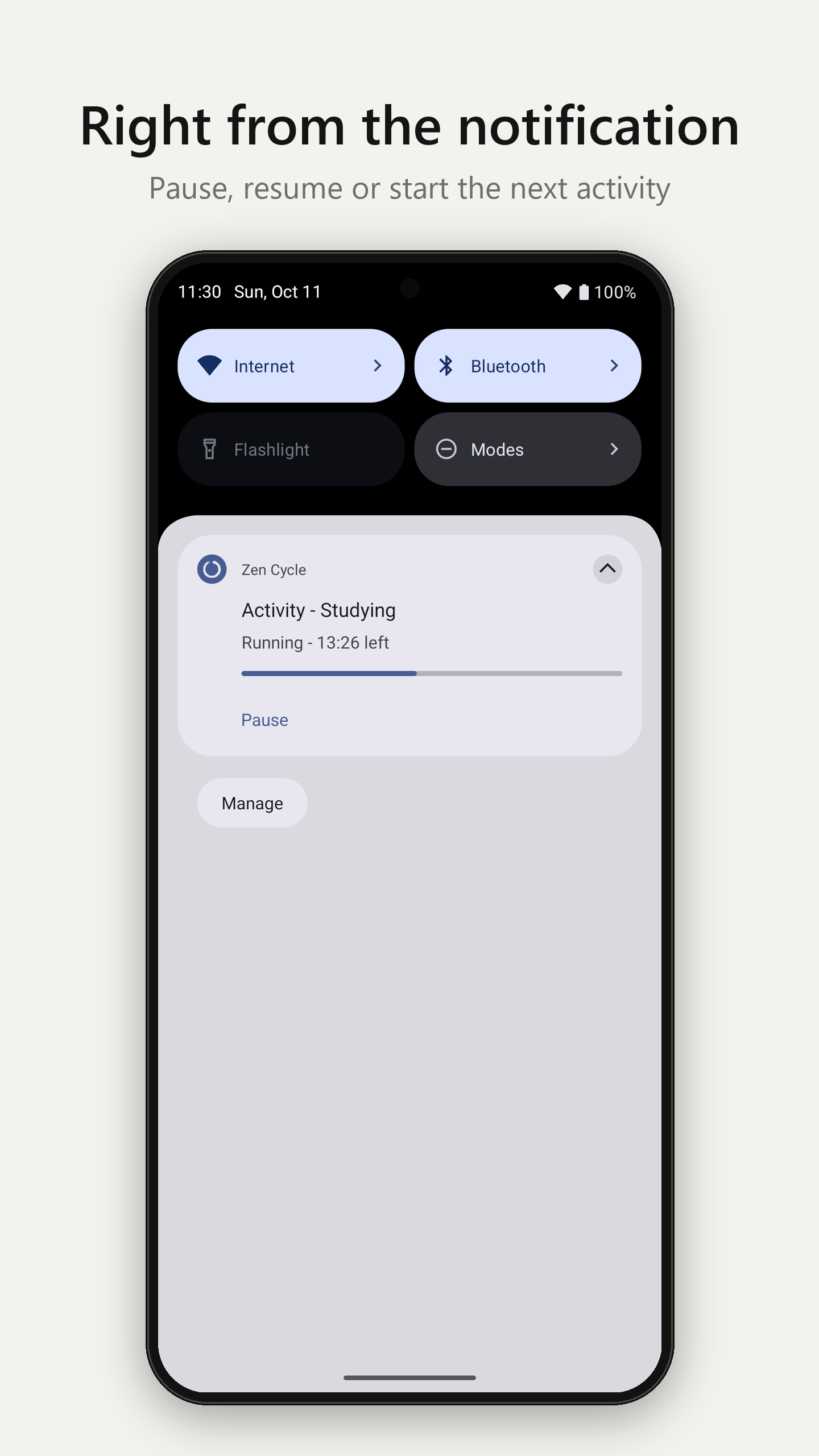
- Pause and resume right from the notification (Android)
- Quotes for focus and the break, including your own
- Light or dark, offline, no account, no ads
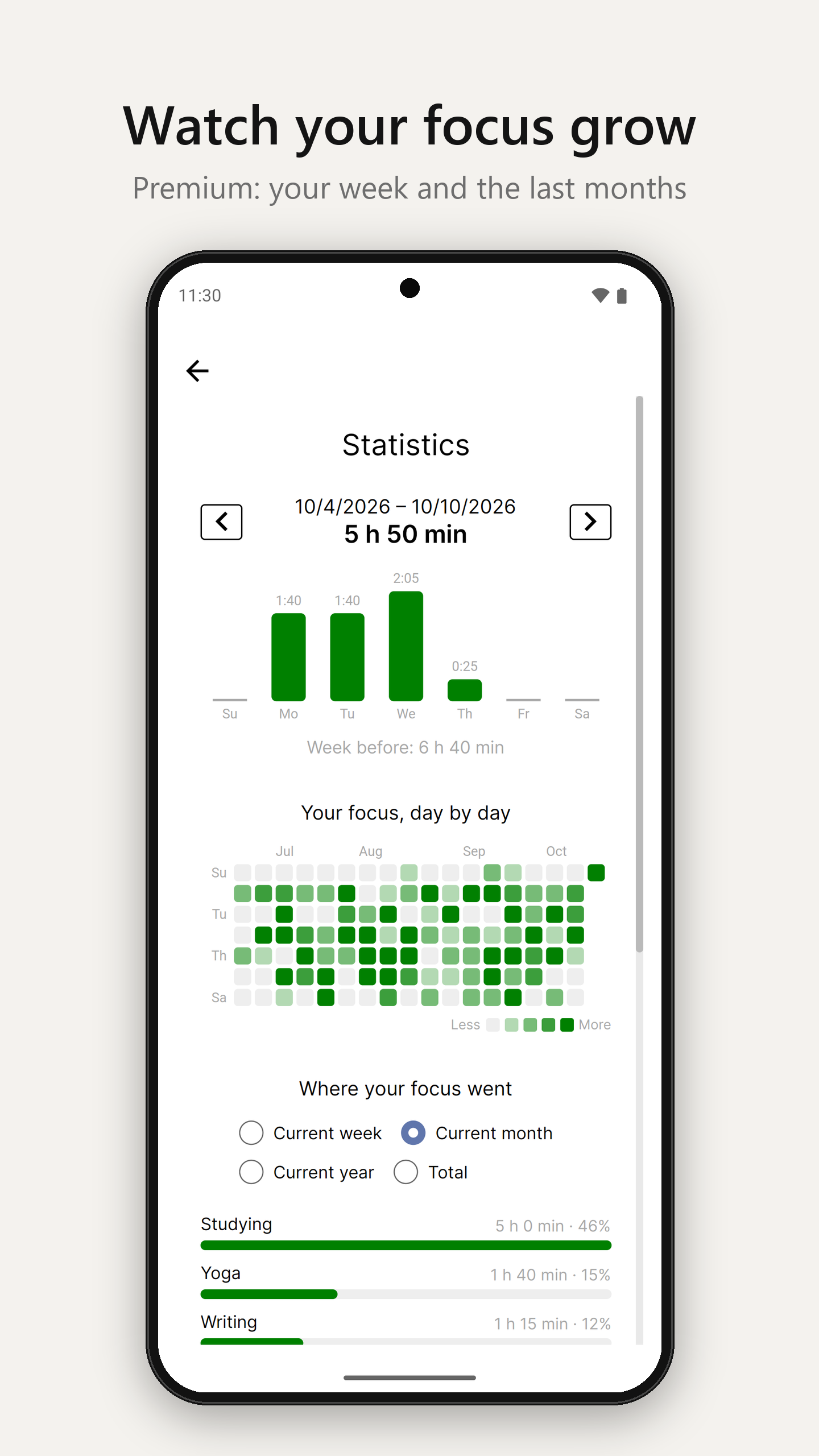
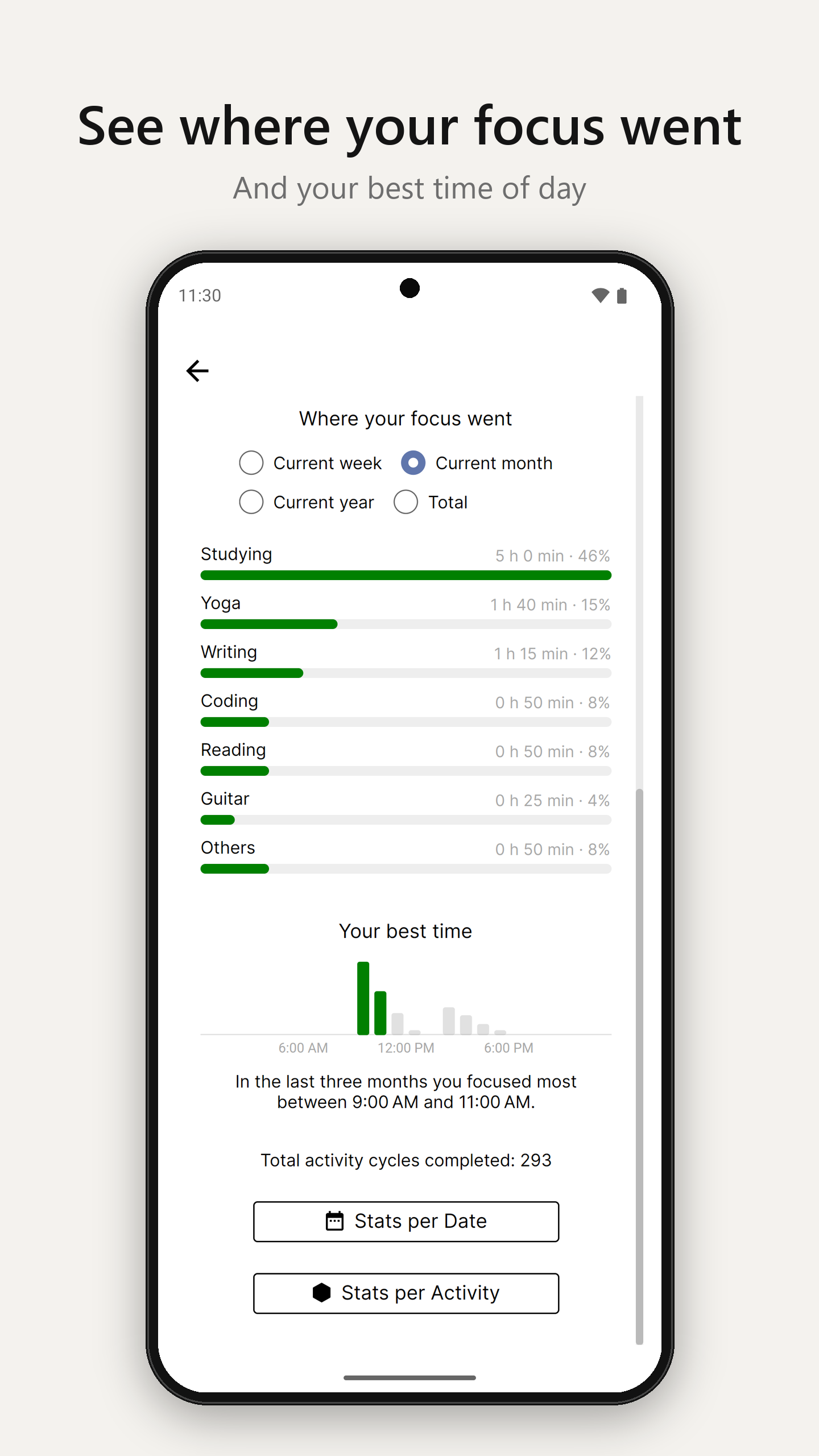
Premium, a one-time purchase, no subscription: statistics with your week, a calendar of the last months, where your focus went and your best time of day; seven colour worlds; Do Not Disturb while you focus; a duration of its own for every activity; export and import.
Zen Cycle is available for Android and Windows, in eight languages.


More about the app on the product page.
In short
The Pomodoro Technique is simple: one task, 25 minutes of focus, a 5-minute break, a long break after four rounds. Adjust the lengths to suit you, take real breaks – and use a timer that leaves you in peace.